
Why Scott moved his family to Portugal, and what he learned there
From remote Brazil and paddle courts to visas.pt: practical truths about safety, cost, language and the paperwork that actually matters.
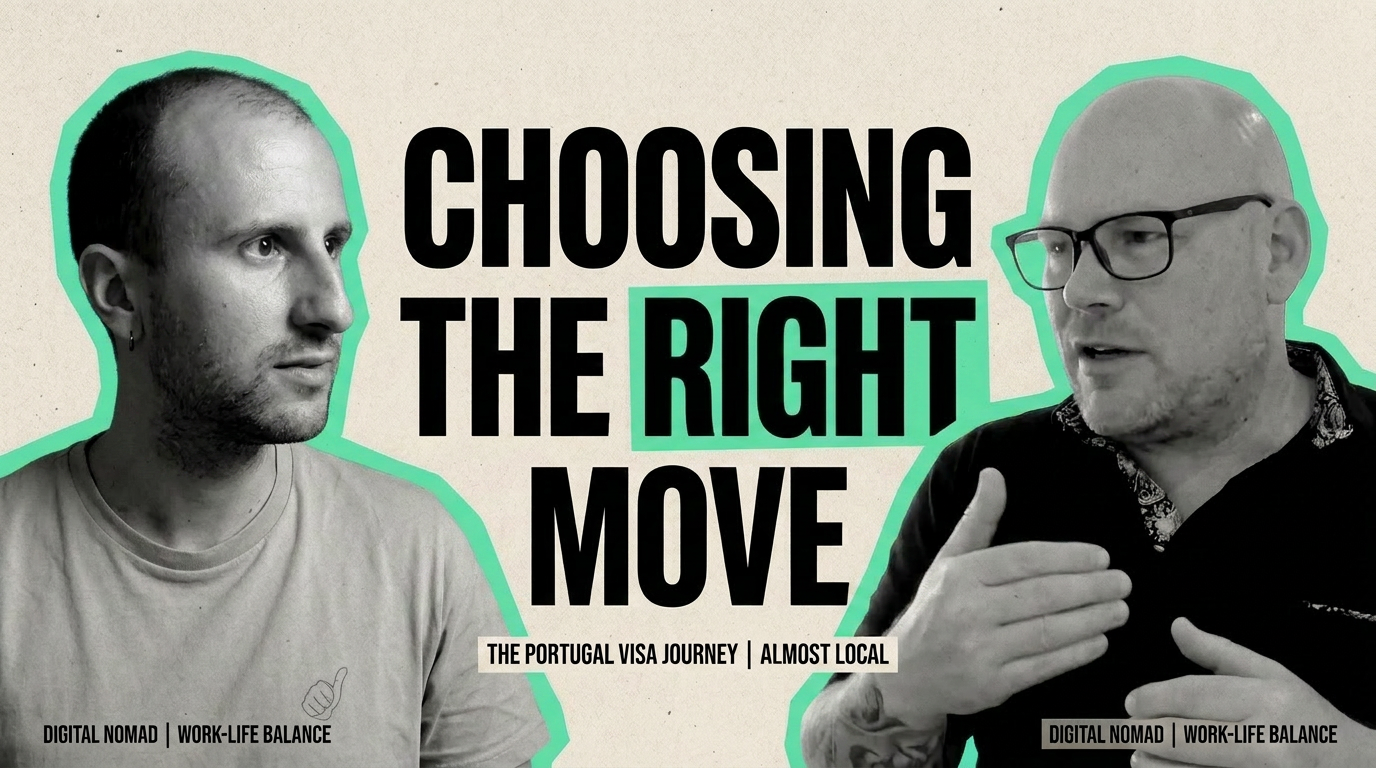
“I became a digital nomad before there was a word for it.” - Scott Kirk
Scott says that sentence at the start, but the moment that stayed with me was later: after nine years in Portugal he still values the sunshine, the safety and the outdoor life, and lists bureaucracy as the single thing that would make him leave.
This conversation is useful because Scott runs visas.pt and because he’s lived in places so different you can hear the comparison in every answer. He’s generous with concrete odds-and-ends anyone moving to Portugal will need: costs, healthcare, where to live, and the small cultural moves that make integration quieter and faster.
Why Portugal now (and how he decided)
Scott and his wife had to swap “wherever” for “somewhere stable” once their daughter arrived. He’d travelled and worked in places as remote as Brazil and as island-like as Mauritius; his daughter spent the first three years of her life living in six countries for six months at a time. Nine years into Portugal, he gives three practical reasons he chose it:
safety for family (he contrasts Portugal with Natal, Brazil, which he described as one of the most violent cities he’d lived in),
predictable healthcare and schools, and
sunshine that gets the family outside.
He sums up the decision as a phase: ‘‘find a place that suits what you want at this time in your life.’’ He still has itchy feet, but for now the Algarve fits.
What integration actually looked like (language, friends, daily life)
Scott’s integration playbook is simple and specific: do the local thing, not the expat thing. For him that meant sports, paddle (the sport, not a misspelling), and joining local courts and communities. That led to friendships more reliably than bars or English-only social groups.
On language: Portuguese is mostly learned out of respect and connection, not pure necessity, he estimates 90–95% of people in Lisbon/Algarve speak English. But local integration requires trying: older generations and interior towns don’t. He notes a real friction for English speakers who learned Brazilian Portuguese first, accents matter.
Small cultural moves that helped:
Don’t get angry about slowness. Scott’s blunt one-line advice for looking and acting local: relax about delays and missed appointments.
Talk about the weather, coffee, the beach. Not politics.
Use sports, schools and local activities as entry points, drop-off conversations at school and a paddle court are where communities form.
"If you want to get involved with the local community, learn a little Portuguese. It's out of respect." - Scott Kirk
Money, healthcare and housing, the real numbers you should know
Scott is practical here, and he gives actual figures you can plan around: the Portuguese minimum wage is about €920/month; the national average hovers near €1,100. Rents have risen, a one-bedroom can easily match or exceed local average wages in many areas. There’s an important implication: unless you bring income from abroad or start a business, local work (outside tech or niche fields) won’t cover comfortable living.
He points to two common pathways:
Bring remote income or start a business, Portugal offers tax incentives and easier access to the EU market.
If you plan to work locally, expect modest wages and factor that into your location choice (inland and the Silver Coast are cheaper than Lisbon or the Algarve).
Specifics for common costs:
A full, authentic plate of the day can be about €12 and may include appetizer, meal, dessert, coffee and a glass of wine.
Private family healthcare he uses costs roughly €120/month for three people and includes house calls and more personal attention.
High-end property markets (Quinta do Lago, Comporta) can reach tens of millions; there are cheaper regions further north and inland.
On finding a place: Scott warns of predatory rental practices, landlords asking for six months’ deposit or refusing to register a 12‑month contract (which you need for some visas). His company’s property finders negotiate in Portuguese and prevent those costly mistakes.
The paperwork problem, and why people pay for help
This is the recurring theme. Scott describes Portugal’s immigration bureaucracy as the worst part of living there. The agency changed names (SEF to SEF/IAMA) and at times made appointments and visa steps grind to a halt.
Consequences he sees often:
Families split across different appointment locations, making legal compliance impossible without intervention.
Landlords avoid registering contracts (and the taxes that follow), which jeopardizes visa approvals.
That’s exactly where visas.pt positions itself: handling NIFs and tax IDs remotely, negotiating rental terms in Portuguese, and coordinating lawyers when the state process fails. Scott’s claim is modest but concrete: when the process breaks, experienced local lawyers and agents save time and money.
The best, the worst, the single tip
Best: nature. Scott describes snorkeling with seahorses, hiking to waterfalls and motion-camera wildlife shots that caught badgers, foxes and genets. The outdoor life matters.
Worst: bureaucracy, it’s the mosquito in an otherwise paradisiacal place.
Top tip: come see the areas first, then choose the lifestyle. Don’t pick Lisbon because you think you should; pick the coast, city or inland valley that matches how you actually want to live.
If you want to check one practical next step Scott recommends: ask what lifestyle you want, then use a tool like Find Your Portugal (he mentions it) to match towns to that lifestyle.
If you want to hear the full conversation, Scott tells the stories that didn’t fit here: the mango tree and the monkeys in Brazil, the motorbike trips to upload game files, and the exact way he pivoted from educational games to property and visas. It’s a reminder that the move to Portugal is logistics plus life design, and the logistics usually need a local hand.