
Why Paul left New York for Paris, and why he stayed
From military postings to Parisian shortcuts: practical tradeoffs, race abroad, and the exact things he wishes he'd known before moving.
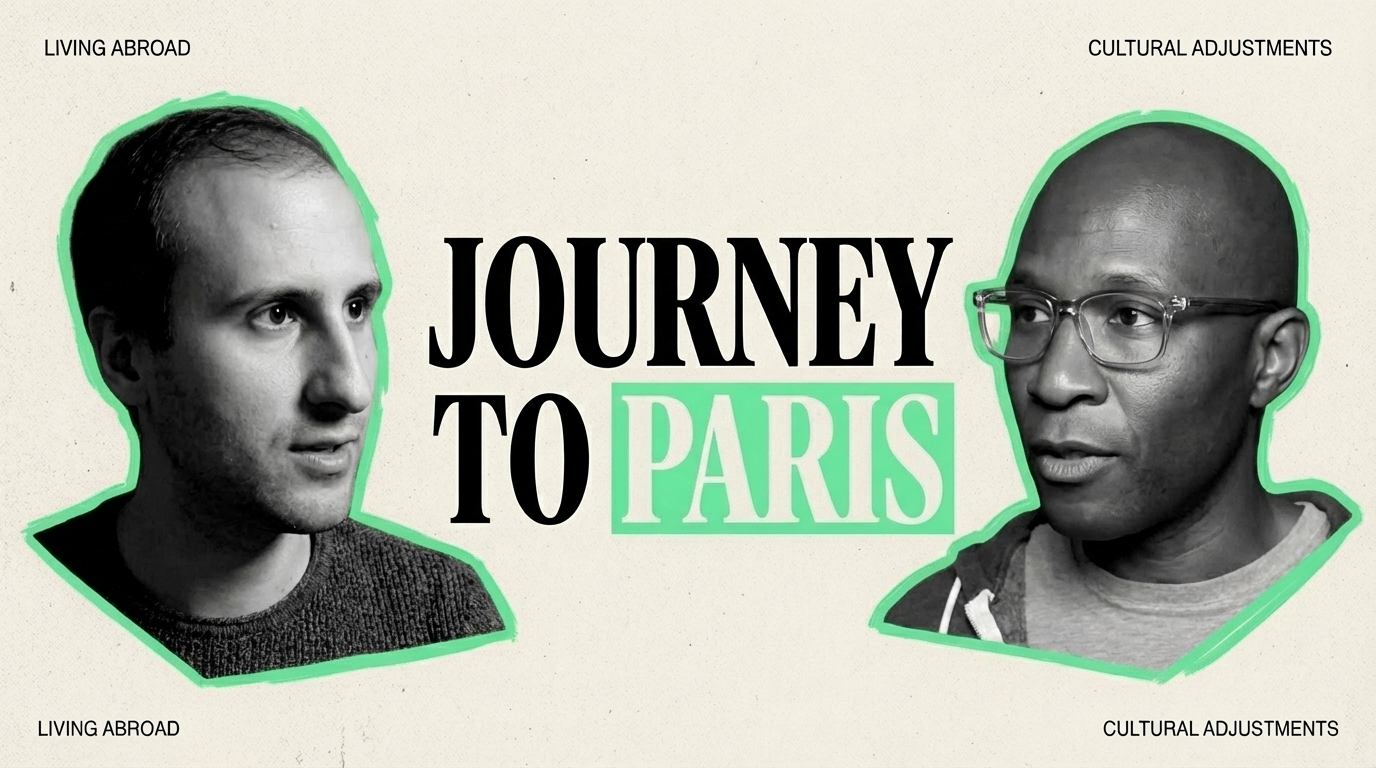
“I feel a little more comfortable outside of America when it comes to the racial issues” - Paul says this without hedging, and the sentence frames most of what follows.
He arrived in Europe as a military officer, then layered on corporate transfers: Germany, Italy, Luxembourg, Athens offers he turned down for Paris, and now five-and-a-half years later he’s still here. The conversation with Expat Experts Podcast skips the travel postcards and stays with the useful stuff: what actually changed about daily life, what cost him time or patience, and the one habit that makes Parisians look at you funny.
The move that wasn’t a whim
Paul treated the change like a series of doors opening. A company transfer pulled him from New York to Luxembourg during COVID, an escape he welcomed after George Floyd and the strain at home, and later a role gave him the option of Athens or Paris. He chose Paris because it felt closer to the rest of Europe and less like a permanent vacation.
Two useful details: he’d already lived in Europe for years thanks to the military, and he’s visited 54 countries, so his decisions are travel-informed rather than romantic guesses. That matters when you’re choosing a city based on lifestyle tradeoffs instead of postcards.
“If I was to compare what that would be in the States… I would be paying $5,000 a month. You can get a really decent place for less than $2,000 here.” - Paul
The practical tradeoffs: cost, healthcare, and bureaucracy
Cost of living: Paul compares Paris to New York and finds it cheaper overall. He lives near the Eiffel Tower in a sizable apartment that would cost far more in NYC. He’s clear that Paris isn’t cheap for everyone, but if you’re coming from many U.S. cities, your money stretches further.
Healthcare: blunt and decisive, Europe’s system surprised him. After a shoulder operation he paid a few hundred euros for private-hospital care that in the U.S. would’ve been tens of thousands. His takeaway: the American fear about socialized healthcare didn’t match his experience.
Bureaucracy: the one place he aggressively warns about, France, he says, is the worst. Banking, housing and permits can feel circular: you need a French bank to get an apartment, you need an address to open the bank account. He credits a local agent with getting him through, but counts the paperwork as a real time- and stress-sink.
These three are the hard numbers and anecdotes readers can use when deciding whether Paris is for them.
How Parisians actually live (and how you blend in)
Paul debunks Netflix clichés with practical notes. Yes, Paris has romance and architecture; yes, there are corners where the film version of the city exists. But day-to-day: people keep tight social circles, greeting rituals matter, and fashion isn’t optional.
Concrete habits that helped him fit in:
Learn basic French greetings (bonjour, bonsoir), not to be cute, but because people expect it.
Adjust your wardrobe: Parisians notice how you step outside even for errands.
Don’t expect neighborly small talk: you’ll often get a polite bonjour and that’s it.
He also calls out cultural differences that bite at first: everyone smokes outdoors, grocery shopping is a frequent, small-quantity task (no month-long American supermarket runs), and festivals are enjoyed in place, people often stop to eat rather than walk while they eat.
Race and belonging: a candid comparison
This is one of the podcast’s rawest threads. Paul, a Black American, says he often feels more comfortable in parts of Europe than he did in the U.S. He doesn’t say Europe is free of racism, far from it, but he observes two patterns:
Where racism in the U.S. is blunt and visible, in Europe it can be quieter, more coded. That can be disorienting.
Europeans sometimes refuse to acknowledge racism at all. Paul calls that refusal dangerous because it erases experience.
He shares specific moments: being stared at in Estonia as the only Black person in the square, or being mistaken for an immigrant on a train despite working at a large financial institution. Those moments sit alongside examples where friends or bystanders intervened on his behalf. The result is mixed: more comfort in some ways, but recurring microaggressions and frustrating stereotyping in others.
Work-life and small luxuries you forget until you live them
Paul loves French work culture for one simple reason: holidays are real. Companies close, people genuinely disconnect, and long August breaks are not theatrical, they happen. For him, that normalized boundary between on and off is a win.
Transport and mobility are another practical win: trains make domestic and international travel simple, so owning a car often isn’t necessary.
And a small quality-of-life detail that mattered: eating in France felt healthier. Portions, ingredient quality and the rhythm of meals changed how he felt after a month of living there.
The one tip he gives everyone who’s thinking of moving
“Just do it.” He qualifies that: learn a few basics of the local language, read about how life actually works there, and be respectful of local customs. Then go. He wanted to push back against over-romanticized fears: Parisians aren’t mean, they’re busy; people will help you if you make the effort.
If you want the full texture, his stories about Sundays in Germany, Museum Nights in Frankfurt, or selling his car in Luxembourg, listen to the conversation. Paul’s concrete accounts (54 countries visited, shoulder surgery experience, apartment-price comparisons) are the sort of under-the-radar details you can use when planning your next move.
If you’re thinking about Paris, keep three things in your pocket: basic French, a patient agent for the housing paperwork, and the mental permission to enjoy long holidays. That combination, Paul argues, is what turned curiosity into staying.