
Why Belize felt like an opportunity, and what the honeymoon hides
Simo D. traded 20 years of Canadian construction for land, LLMs and a quieter life in Belize, with trade‑offs he didn’t expect.
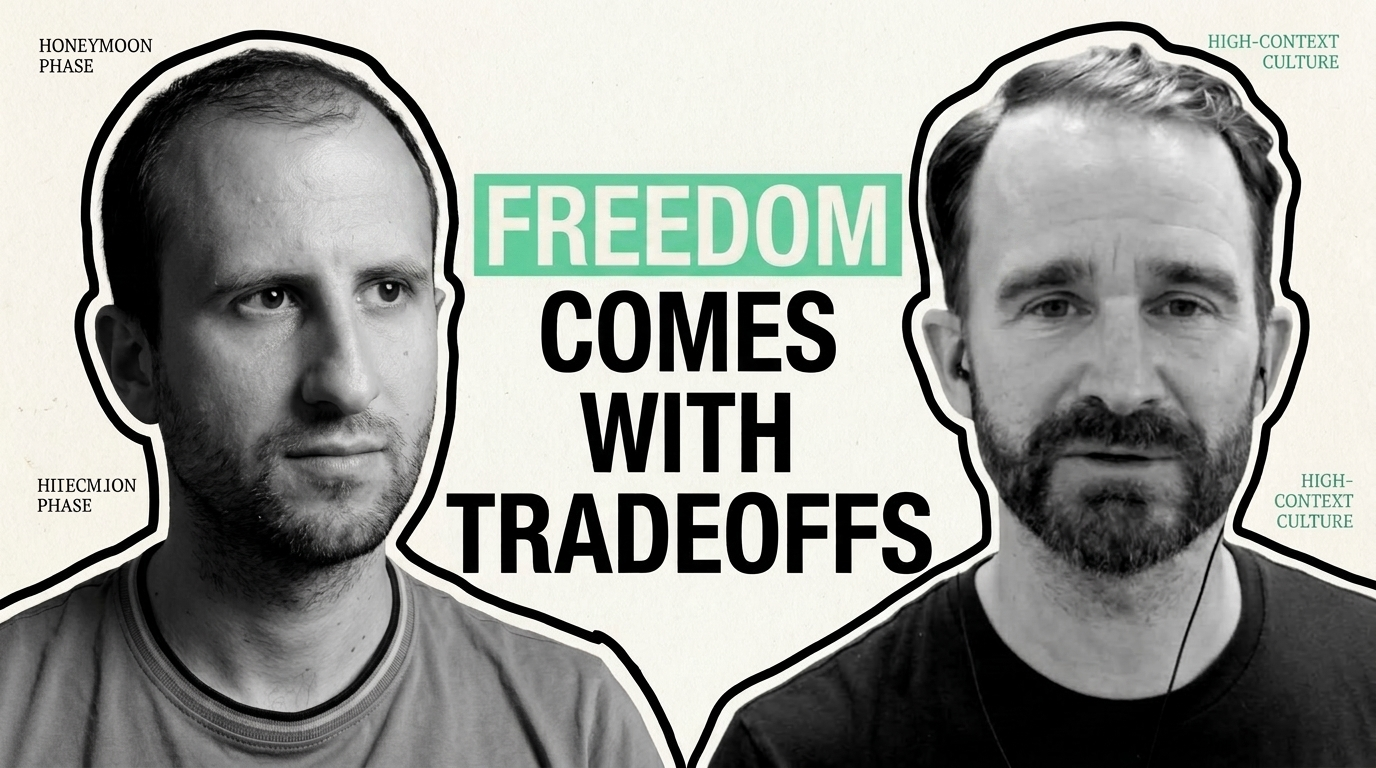
“You can have your dream, but you have to accept the trade‑offs.” - Simo D.
Simo landed in Belize after twenty years in construction and, with his wife, packed a lot into a short run: renovated and sold a house in Canada, had two children, bought land in Belize, built a home and rebuilt their careers. They moved in 2022 and call it a four‑year sprint that only recently let them “come up for air.”
Why Belize showed up on their radar
Simo named practical reasons that made Belize feel feasible: English as a primary language, generally lower cost of living than Canada, property taxes that are “super low,” and a four‑hour flight back to family. He stresses one concrete financial reality that drove the move, beachfront‑adjacent property in Belize cost a fraction (he says 10–20x less) of comparable waterfront land in Canada, which let them buy and build outright instead of waiting years.
Two regulatory details matter for anyone considering the move:
Tourist‑to‑residency: you live in Belize on rolling tourist visas (renewed every 30 days) for 12 months before you can apply for residency.
For Canadians, Belize has no tax treaty with Canada: if you stop being a Canadian tax resident and earn foreign income while living in Belize, you may avoid Canadian income tax on that foreign income.
Those aren’t free perks, they shape timing, cash flow and whether you can work there immediately.
The honeymoon and how it ends
The first months looked like an extended vacation: beaches, diving, restaurants. Simo warned that most foreigners expect that rhythm to continue and get surprised when it can’t, financially or logistically.
He gave a stark example of how the honeymoon collapses into everyday life: the work that pays the bills doesn’t always move with you. Simo didn’t want to re‑enter construction in Belize because local building expectations, responsibility and standards differ. He pivoted instead into writing, podcasting and then AI systems design, a path that leaned on both curiosity and a new tech toolset.
He also flagged common practical shocks: intermittent power outages (they’ve improved from daily to a few times a week or sometimes weeks without outages), limited grocery availability (you may drive hours to find a single ingredient), and seasonal issues like sargassum on beaches. He quantifies tourism’s pull this way: tourism accounts for roughly 86% of Belize’s GDP, and that shapes local life.
“You’re never gonna swap your problems. You’re just gonna swap them for new ones.” - Simo D.
Belonging: small community, transient friendships
Belize’s population is small (about 400,000 countrywide), and in many communities there are only a few thousand full‑time residents. That makes social life both easy and fragile: you see the same people repeatedly and can form friendships, but the community is very transient. Simo describes the awkwardness of actively inviting people out (it can feel like dating at first) and the disappointment when new friends move away.
For Simo, the breakthrough came when the kids started school and they found reliable childcare people. That created breathing room to meet other parents and build a small, local network. The pattern he recommends: make an effort, go to cultural events, and be ready to lean a little into extroversion if you’re typically reserved.
Local friction and land politics
Simo explained a source of tension that will matter if you buy property: Belizean beachfront is public (the “Queen’s Land,” roughly 66 feet from the high tide line). That means attempts to privatize or block access to the beach, sometimes driven by uninformed real estate deals, create real local friction. He’s candid that as a buyer he’s part of the problem: foreign purchases do push land prices up, and that dynamic is under discussion among locals.
He also described cultural differences that once looked like “laziness” until he read about high‑context versus low‑context communication: people in Belize often assume shared context and won’t volunteer information you’d expect elsewhere. The fix is procedural, ask explicit questions (“Do you have the paper here?”) rather than assume someone will offer the detail.
How he rebuilt a career: from construction to AI systems design
Simo used available time to write, he published a book (Home in Good Hands) and won a reader choice award. As large language models emerged, he leaned into them, using LLMs to prototype career ideas. One notable tool he built: Career Pivot Labs (a custom GPT) that analyzes your past roles and suggests remote‑friendly job directions. That led him into AI systems design, prompt engineering, then programs, then end‑to‑end business automations.
He also built Move Smart, a guided tool that narrows countries based on what you actually want (it produces a 25‑page report and shortlists three matches). He cautioned that early LLM behavior favored the usual expat countries, so he tuned the model to surface less obvious matches based on user answers.
The practical habits that help you blend in
Simo’s short cultural rule: go slow. Belize has a Caribbean laissez‑faire rhythm. If you don’t want to stand out, stop importing hustle culture and the expectation that everything should be done immediately. He gave the bank anecdote, a fellow foreigner loudly complaining about the bank in front of locals, as a quick way to make yourself noticeable for the wrong reason.
Other tactical notes: use surge protectors for appliances, expect to run AC year‑round (raising electricity bills), and prepare mentally for heat waves (Simo recalled a recent one that topped 50°C and gave his family prickly heat lasting months).
What’s best and what’s worst
Best: an unusual degree of freedom, fewer bylaws, low property taxes and a national pride rooted in a light regulatory touch. Simo described a feeling of being able to “live any way you want” if you’re willing to accept some friction.
Worst: intense, physical climate issues (the heat), and the ongoing cost of cooling and power stability.
If you want Simo’s practical tools and writing, he’s on Substack at Unfiltered Abroad (and an AI substack called BOTTBOT), on LinkedIn (Simon D), and he runs MoveSmart at MoveSmart.world. He also mentions botbotgenai for AI projects.
Reflection
Belize gave Simo the one thing he wanted most: a faster route to owning land and designing the life he wanted. It also forced him to be explicit about trade‑offs — medical timing, community creation, climate limits and a new career built from experimentation. If you’re thinking of the move, treat the honeymoon as a deadline for planning your work, social life and the small, boring adaptations that become daily life.
If you want the full conversation — where Simo walks through residency paperwork, the Move Smart and the exact prompts he used to pick AI systems design — the full episode is now available in all platforms.