
The farm village near Panama City where ‘true wealth’ is food
How Thomas Patton turned 2,500 hectares of industrial land into a regenerative farm‑village and what that means for people moving abroad.
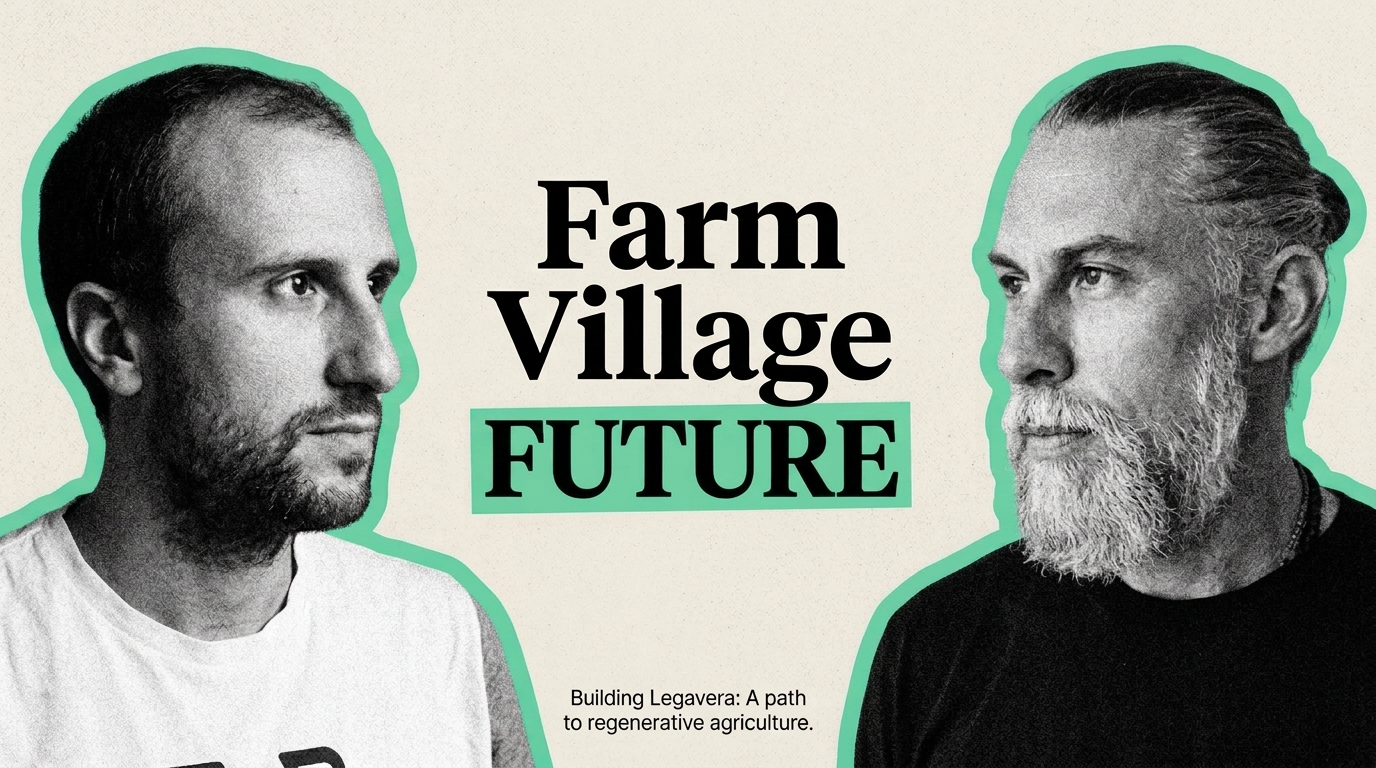
“If you want a second home, you should be thinking of food security, that’s true wealth now.” - Thomas Patton
Thomas Patton spent a decade inside an industrial farm, hated the job, then spent the next eight years tearing that model apart and rebuilding it as a regenerative operation. The result is Lega Vera: a farm‑village less than an hour from Panama City designed for people who want to live with nature without romanticizing the work.
Why they stopped trying to control nature
Thomas tells the story bluntly: the more money they threw at new irrigation and machinery, the more nature simply reclaimed. They closed the pig operation, stopped herbicides and wormers, and began using cattle as a landscape tool, high stocking density for short periods so manure becomes a buffet for soil life.
Why that matters: when manure isn’t toxic from pharmaceuticals, earthworms and beetles return, topsoil builds, water percolates better, and grass productivity goes up. Thomas’s practical outcome: the same property that supported X cattle under industrial logic can carry many more animals once the soil is rebuilt. He calls himself a “grass farmer”, soil first, animals second.
The concrete experiments that became a village
Legavera didn’t start as a real estate product. It started as a showroom farm and a simple question from his wife: “We have a farm, why are we buying food at the supermarket?” That led to:
Turning scraps into feed using black soldier fly larvae to cut purchased feed for poultry.
Using multi‑species grazing, ducks for mosquitos, sheep for ditch maintenance, chickens to reduce parasites, to replace machines and chemical inputs.
Opening a restaurant on the farm that uses almost entirely on‑site ingredients (moringa chimichurri, papaya barbecue sauce, plantain‑based tamales) to tell the story and make the economics visible.
Those small, on‑the‑ground experiments let them say: here’s what works, here’s what wastes money, and here’s a model you can plug into without starting from zero.
What the Lega Vera model actually is
Lega Vera is not communal farming or a homogenous eco‑colony. Thomas describes it as a set of private farms with shared rules: a gated village with an administrator for basic services, a cooperative for trading surpluses, and guidelines to keep neighboring landscapes regenerative. Lot sizes offered are two models: one acre for people who travel or want a micro‑garden, and five hectares for those aiming to produce cacao, coconut, coffee, or a small commercial orchard.
Important detail: they expect people to break ground as early as January so fruit and perennial crops begin their multi‑year cycles sooner. The point is not zero‑risk farming; it’s lowering failure odds by removing predictable mistakes and giving residents access to shared know‑how and infrastructure.
The trade‑offs Thomas still tells you about
He’s candid about the learning curve. When they started, the best resources were inset books (Joel Salatin, Will Harris, Acres USA). Mistakes are expensive not only in dollars but in convincing teams to change practices after failures. His advice: don’t buy the shiny new tech first; surround yourself with people who think holistically and accept that nature works slowly.
He also names life trade‑offs: fewer concerts, limited intercity travel options, and a slower pace when you want it. But the balancing advantages are security, healthcare access (Johns Hopkins‑affiliated hospitals, lower cost medical tourism), and being one hour from city services while living a materially different day‑to‑day life.
Who it’s actually for and the social side
Thomas sees two core audiences: people who can afford a third home and want a lifestyle experiment, and people who want a second home that functions as a food legacy for future generations. He emphasizes the social design, neighbors with complementary production (one keeps bees, another produces pastured pork) and lightweight trading so residents can swap goods without a strict ledger. It’s not a commune; it’s a neighborhood that shares regenerative practices and reduces single‑player failure.
Language and logistics: you can get by with basic Spanish and a lot of English is spoken in Panama, especially in private schools and the service economy. Real estate and residency paperwork are routine if you use competent local attorneys; the cost of living depends on how city‑style you want to live.
“We are trying to bring the topic of food security, decentralization, and being self‑sustainable.” - Thomas Patton
The practical next steps for a listener who wants this life
Thomas’s short answer: start small, learn from practitioners, and focus on soil. Lega Vera’s public materials describe the two lot sizes and an initial phase that allows buyers to begin planting without waiting for full build‑out. If you’re serious, expect an investment of time and money and a steep, but rewarding, learning curve.
If you want to dig deeper: Legavera.com and their Instagram (@legaverafarmvillage) are Thomas’s contact points; they’re taking reservations and planning a January ground‑breaking for early adopters.
The sharp end of this idea is simple: land is not just square meters anymore. For Thomas, “true wealth” is what your land produces for your health, resilience, and family in twenty years. That flips the second‑home conversation, from an asset for leisure to an asset for stewardship.
If you want the full conversation, Thomas walks through the sourcing, the failures, the restaurant economics, and the exact on‑farm fixes that moved them from industrial loss to regenerative yield in the episode recording.