
How Greece chose him: a Kenyan's life in Athens
Anthony Muiruri on learning Greek, finding community, publishing during lockdown and why healthcare felt like a revelation
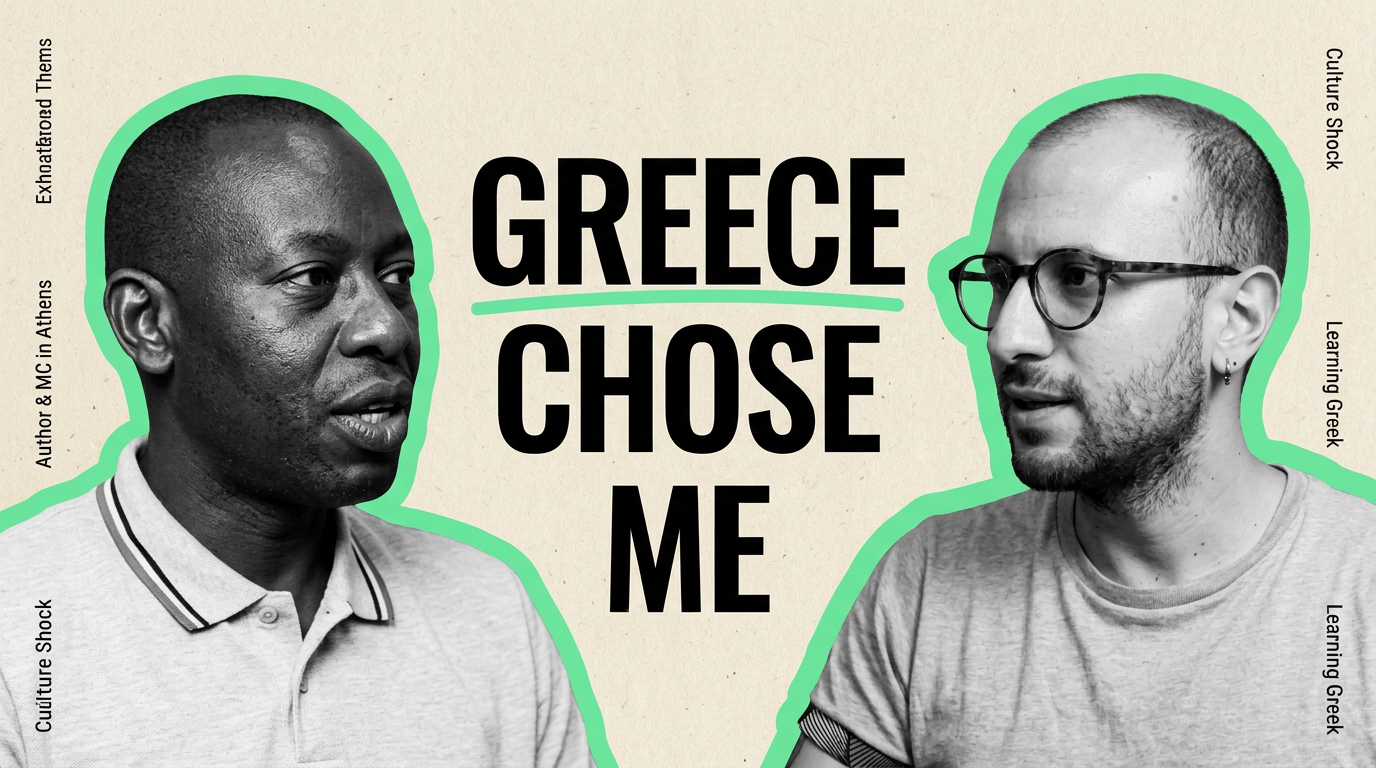
“I didn't choose Greece, but Greece chose me.” - Anthony Muiruri
Anthony opens there and the sentence carries the rest of his story: not a planned migration track to the U.S., but a slow claim on Athens that turned into work, a book and a community. He landed expecting European contrasts and got them in full: five‑kilometre runs to school back in Kenya, the shock of driving on the opposite side, and a social rhythm that sounds loud to someone from Nairobi.
Learning Greek one word at a time
Anthony learned enough Greek within months to do everyday life. His method was simple and practical: pick up single words in shops, learn a kids' song or two, and let street repetition build vocabulary. He recommends cartoons and music because "kids' language" teaches slowly and sticks quickly.
Small details that mattered
Mistaking a head bobble for yes and getting corrected in a bakery taught him fast why language matters.
Within the first few months he could order, navigate and joke enough to feel less foreign.
This is the kind of language advice that isn't a course plan: it's what to practice on day one when you need bread, a bus or a neighbour to understand you.
Community as practical infrastructure
If you want one reason Anthony stayed, it's the Kenyan community in Athens. He estimates fewer than a thousand Kenyans in Greece; still, their gatherings routinely draw 100–200 people. Those ties do real things: host a newcomer for days or months, cover hospital bills collectively, MC weddings together, bring food and dance to festivals.
That communal safety net solved concrete problems, housing searches, local warnings about where to live, and an immediate social life, and it also did the moral work of transporting home there and back. Anthony credits the community for turning strangers into practical allies the way you'd expect family to be.
Work, identity and publishing during lockdown
Most of Anthony's public life, MCing events, speaking and publishing, took off in Greece. He began sharing motivational thoughts, got booked to MC Kenyan community events, then rode the 2020 lockdown into TikTok traction: Greek speakers on TikTok asked, Who is this guy speaking Greek? That attention nudged him to publish.
He has two books now. The first, written from childhood lessons, is Be Good for Good, a collection of moral stories. Later he published the workbook he had drafted years earlier, Achieve Your Dream. When asked how to find him, he suggests searching Be Good for Good on Amazon or looking up his podcast Abroad Experience on YouTube.
A small, practical publishing moment: a TikTok prompt, "Have you written a book?", became the trigger to move a long‑shelved manuscript into print.
What surprised him about Greek life
Several contrasts stuck with Anthony:
Saying sorry: in Kenya, people apologize often as an empathy marker. In Greece, you say sorry mainly when you are at fault. That difference felt odd at first.
Volume and expression: Mediterranean discussion looks like shouting to newcomers. He learned that loudness isn't always conflict.
Healthcare: Anthony gives Greece a near‑perfect score. He was surprised by how ambulance and hospital systems respond first and sort insurance later, a relief compared with experiences where emergency care requires upfront cash.
He also noticed structural differences: standard salaries in Greece create a predictable balance between wages and cost of living, which contrasted with Kenya's variable pay and wider income gaps.
Practical tips Anthony would hand you
If you're coming for a holiday, aim for March–June or September–October; avoid August crowds.
Learn essential Greek by repetition: one word a day, kids' shows, and the names of everyday objects.
Find a community, church, cultural groups, or compatriot networks, sooner rather than later. It will solve housing, social and emergency needs.
Expect bureaucracy to be slow and paper‑heavy. Bring a complete file the first time you go to an office: birth certificate, insurance, proof of address, every document you can think of.
Small cultural moves that signal localness
Anthony jokes about the classic Greek trifecta: drink a freddo espresso, take a long lunch, and maybe learn a few curse words (he claims he won't). These are gestures, but they also mark the softer work of fitting in: routines, flavors and the way people speak in public.
The aftertaste
Anthony's story is not a how‑to checklist. It's a portrait of someone who arrived with a dream, found new work and voice, and kept a clear lens on what made the move sustainable: language, local friends who behave like family, and the chance to show up, on stage as an MC, on TikTok, and in print.
If you want to hear the moment that convinced him to publish, or the short story that became his first book, listen to the full conversation on Almost Local. It closes season three with a practical, warm conversation that makes Athens feel navigable, not perfect, but full of ways to belong.
If you're planning a move to Greece, Anthony's final, simple line is the best test: what do you need on arrival, a seasonal plan, a community, or a file of papers? Pack for all three.