
How a seven‑week move, snakes and metros rewired one parent's life
Anthi Patrikios on moving from Manila to Nairobi to Tashkent, parenting abroad, burnout and why she became a parent coach
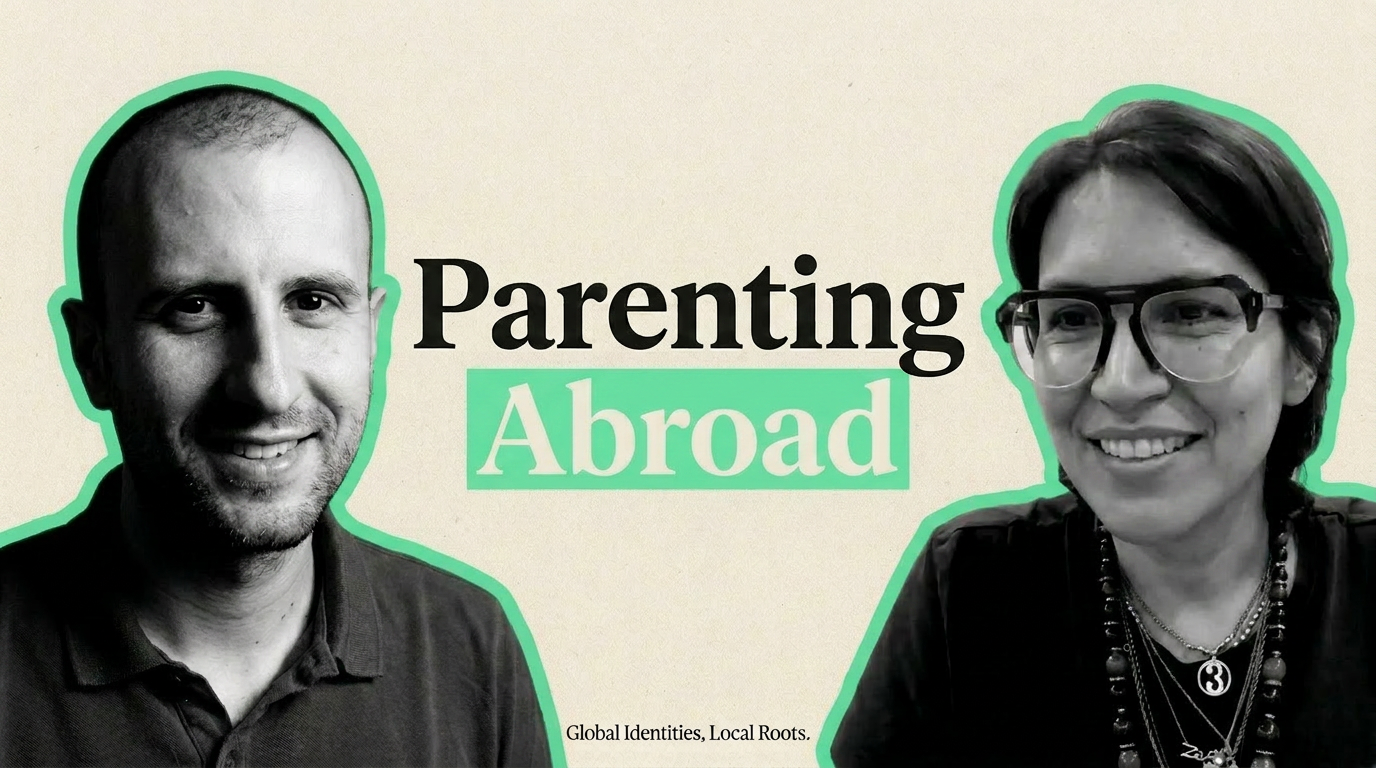
“I don't want my whole life to be my work.” - Anth Patrikios
Anthi says that sentence about halfway through the conversation, and it explains almost everything that follows: the long spells of travel and research, the decision to teach, the move with a seven‑week‑old baby to Nairobi, the slow unravel of mental health during COVID, and finally the pivot to parenting coaching. This episode is less a travelogue and more a map of how a career, marriage and parenting change when you live on purpose across continents.
The job that stole her life and the moment she chose to reclaim it
Anthi spent eight years on a research team doing school‑health and nutrition projects funded by World Bank, UNICEF and UNESCO. She describes it as “the sexiest job”, constant travel, two suitcases, being away three weeks of every month. It sounds glamorous until it isn’t: a friend needed her and she couldn’t be there. That was the hinge.
She retrained as a chemistry teacher, taught in state schools in east London (2,000–3,000 pupil schools), then moved into international teaching, seven years in Manila at a top international school, followed by a move to Nairobi where her husband had taken a post. Those transitions were pragmatic (jobs existed) and cultural (she loved the energy of Manila), but the throughline is the trade‑off between career momentum and being present for people she loved.
Moving with a newborn: the Athens passport story
One detail that captures the logistics of life abroad: their son was born in the Philippines and they had to move to Kenya when he was seven weeks old. Getting a first passport overseas proved the choke point, they flew to Greece, lived in an Airbnb while sorting paperwork and then flew on to Nairobi with suitcases and shipments. Anthi and her husband leaned on spreadsheets and careful planning; it’s the kind of household skill she jokes every relationship needs.
The move exposed how fragile community is when you arrive with a newborn. In Nairobi they had a school community, but then her husband had a serious accident, PTSD followed, and COVID shrank their world. Anthi was candid about the aftermath: major depression, therapy, and an adult ADHD diagnosis that she now treats with medication. The honesty here is useful because it links the practical (relocating with an infant) to the mental health cost that often goes unnamed.
“You don't build community when you've got a six‑month‑old.” - Anthi Patrikios
Why she stopped working with children directly and became a parent coach
Anthi explains a professional pivot that reads like an ethical choice. She loved working with children but stopped because she was carrying too much of their weight home, confidential stories, trauma and the emotional labour of being a trusted adult in resource‑poor UK schools. She also believes parents are shouldering unreasonable expectations: adults ask children to be more grown up than their brains allow.
Coaching parents felt like a lever with more reach. After personal coaching and training (an 18‑month course), she now runs one‑to‑one coaching and school workshops that align teachers, admin and parents into a consistent relational approach. She emphasizes small, parent‑led changes: if caregivers shift their responses, children's behaviour changes far more effectively than piling demands on the child.
Kenya and childhood outdoors: what six years gave them
Nairobi was hard in the early months but turned into a place that shaped her son's childhood: safaris, year‑round outdoor life, and a normalised comfort with nature (including harmless garden snakes). Anthi highlights something many living abroad parents recognise, the environment you choose matters for the kind of childhood you can give: “Three hundred and sixty‑five days a year you can be outside.” That accessibility, she says, feeds a child's relationship with the planet in a way city apartments rarely do.
She is pragmatic about risk, they respected dangerous animals, but ordinary encounters with nature were integrated into everyday life. The result was a kid who treats a snake on a slide as an annoyance, not a spectacle.
Tashkent by metro: how one photo changed their next move
Ten months into living in Tashkent, Anthi tells a small story that has big purchase: she saw photographs of the Tashkent metro in a Facebook group, forwarded them to her husband and said, “Let's live here.” Three months later he applied for a job and they moved. That moment captures how foreigner life often oscillates between planning and whim, one striking detail can redirect the whole family.
Her take on Uzbekistan is practical and vivid: the city surprised her with green public spaces, a friendly school community, excellent social life and cheap, reliable transport (Yandex taxis and a functioning metro). Cost of living for a family of three is roughly $2,000–$3,000 a month for the lifestyle they chose. Finding housing is straightforward unless you have a pet, small dogs are uncommon in apartments and that complicates rentals. OLX is the usual starting point; agents then separate the real listings from the scams.
What she still recommends and what made her happiest
Anthi's best‑and‑worst shorthand for Uzbekistan: the best is the sense of safety, the architecture and the culture of life together; the worst is variable driving (fast roads because the infrastructure is unexpectedly good). Practical advice: come with a job and don’t over‑research, she prefers the surprise. Language is manageable in Tashkent (English gets you by, Russian is useful and she’s started Russian lessons), and healthcare is good for foreigners if you use the embassy‑funded clinic or private insurance.
She also gives a pragmatic plea to newcomers: have private health insurance outside the EU, expect some paperwork and let schools help with registration. Bureaucracy is manageable but intimidating at first, especially if you don't speak Uzbek or Russian.
Small practices that land big changes for parents abroad
Across the stories, research travel, teaching in east London, seven years in Manila, six in Nairobi, now Tashkent, the recurring point is that parents abroad face the same parenting problems as anyone, amplified by distance, language and episodic crises. Anthi's coaching focuses on reducing pressure on children by changing parent practices, not by adding more demands on the child.
She runs a 10‑day intensive for parents worried about long holidays, dealing with extended family visits, or the loss of structure that comes when school stops. She also offers targeted programmes for temper and patience. Her work is both pragmatic (voice notes, recorded sessions you can catch up on) and shaped by the mobility that defines her clients: international timelines, school cycles and unpredictable travel.
The episode never sanitizes the cost of constant moves: ADHD diagnosis, depression, a husband’s accident, goods that arrive late or never, and a childhood spent between countries. But it also gives the payoff, communities that feel like family (Manila, parts of Tashkent), a son who knows how to live outdoors, and a career redesigned to fit a life she could actually be present for.
If you want to hear the practical bits (how passports blocked a move, the paperwork that schools do for you, or the exact rhythm of Anthi's 10‑day coaching), the full conversation is worth the listen. You can find Anthi on Instagram @anthipatrikios, at anthipatrikios.com, and on LinkedIn for school partnerships.
A final line to keep: when the job asks you for everything, you can choose not to hand it over. Anthi did, and the result is a life that prioritises the young people she believes are worth that work, starting with her own child.